Learning to See in the Dark: Digesting the Old

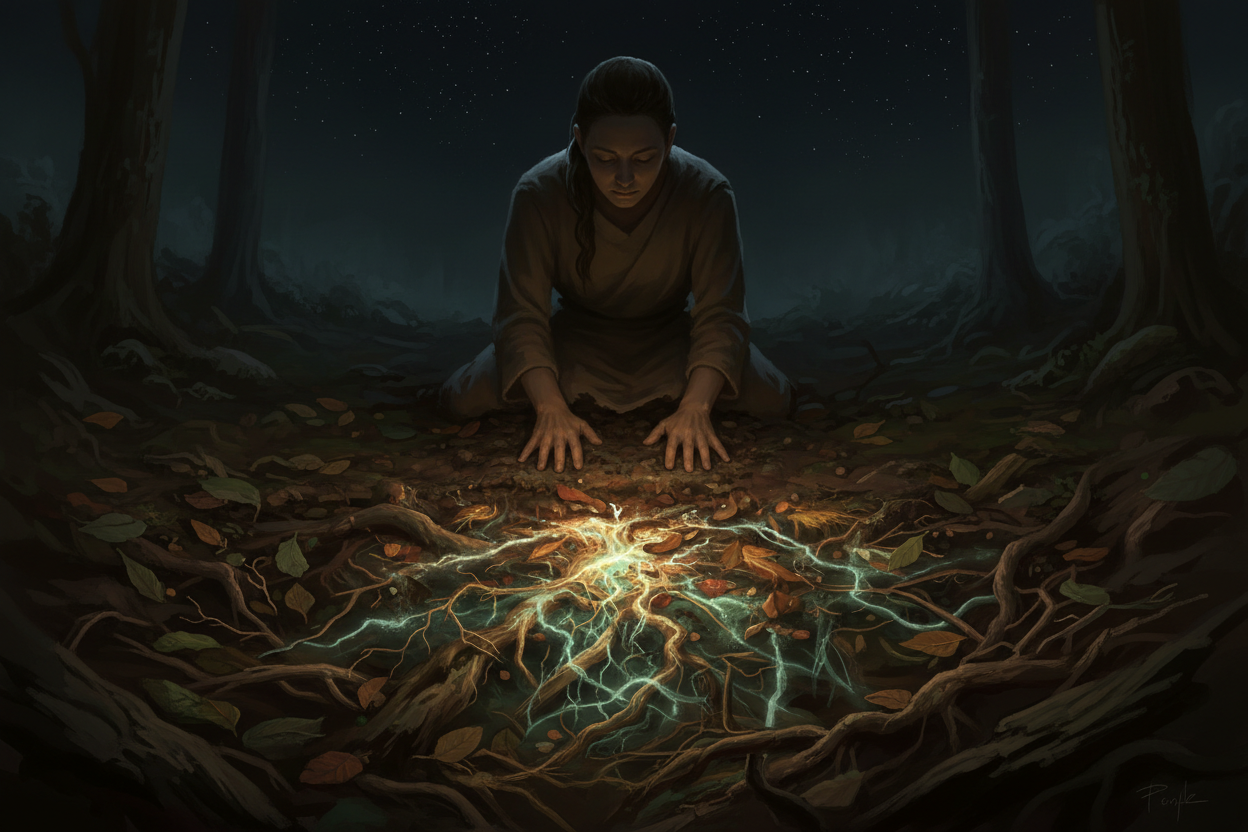
There are thresholds we cross not with bright light or clear maps, but by learning to see in the dark. This first step invites us into a softer way of perceiving—one that moves beyond familiar forms and fixed references into something quieter and more mysterious.It asks us to travel light. No suitcases of old identity, no carefully folded stories of who we think we are. The journey is about release, about letting go of what we have carried for so long. Yet release alone is not enough; what we lose must also be integrated. We cannot rush to explain or reclaim what is dissolving. The unknown becomes a space where hidden parts of ourselves can rise into awareness, much like the way certain experiences or medicines gently draw the unconscious into the light.Most of us begin here, in the mind. Thoughts, memories, beliefs, and projections have shaped our sense of self for years. We identify with them so completely that when they begin to loosen, it can feel unsettling, even frightening. Meditation becomes a gentle fast from thought—not to reject the mind, but to stop believing every story it tells.Earth meets us in this tender place. It is the great holder and receiver, gathering whatever arrives. It begins the slow, patient work of digestion. Not everything can remain in its original form. Some experiences must be broken down, softened, and transformed before they can be released or integrated. This is the sacred rhythm of being alive: to receive, to digest, to release.Thinking shapes far more than we realize. It builds our identity, draws emotional boundaries, and whispers judgments about who we are and what our life means. Thoughts arise within a wider field of awareness, yet they only become truly wise when they resonate with something deeper in the heart. When that inner alignment is present, life feels more coherent—like a steady tone running beneath all the changing notes.Too much thinking, however, can create its own heaviness. The mind loops on regrets, self-judgment, and old stories, tightening around us until clarity feels far away. At the end of life especially, these patterns can grow loud if left untended—trapping us in guilt, disconnection, or a sense of meaninglessness.The center calls us home. Not the small, constructed self built from effort and fear, but the deeper presence that remains when everything unnecessary is set down. From this center, paradoxes can be held. Individuality can bloom without losing wholeness. Life begins to unfold with more grace and integration.This matters deeply as we approach life’s final threshold. Unresolved thought patterns and rigid identities can make the crossing heavier than it needs to be. The real work is to soften, to integrate what has been, and to remember the meaning we have made. What did this life give? What did it receive? How was it woven back into something larger?I am practicing now—catching the recurring thought loops, asking what lies beneath them, and gently returning to the center. Slowing down. Releasing what no longer fits. Trusting Earth’s quiet digestion to turn what falls away into rich soil for whatever comes next.To see in the dark, and in this softer light, the world feels more alive, more tender, and more truly my own.