The Shadow, the Unfinished, and the Ghosts I Still Carry
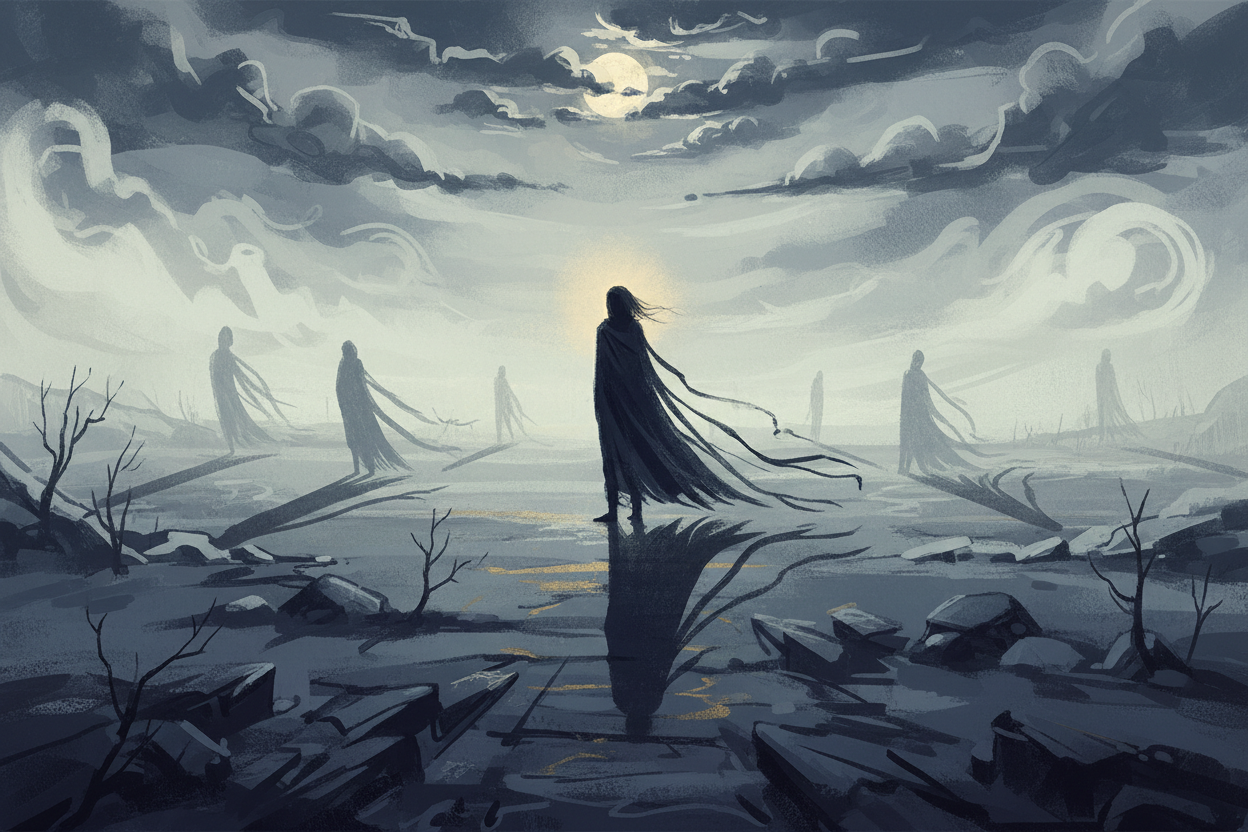
We should not romanticize spiritual growth. When we try to rise above pain without truly meeting it, we only create a false elevation—a kind of spiritual bypass that pretends we are already beyond the difficult parts before they have been digested. But what is not faced does not vanish. Unresolved grief, shame, guilt, regret, and buried emotion become ghosts. They linger in the body, the psyche, our relationships, and even across family lines, repeating themselves because they have never been given the simple dignity of attention. The invitation is never to glorify suffering. It is only to stop abandoning what has not yet been integrated. Whatever has been exiled must eventually be met.
This is where shadow work begins—not as another project of self-improvement, but as an act of quiet honesty. To look inward is to admit there are parts of myself I have not wanted to see: wounds I have organized my whole life around, old fears I mistook for truth, losses I never fully grieved, and versions of myself I rejected because they felt inconvenient, shameful, or too painful. These hidden parts do not disappear simply because I ignore them. The work is only to bring light to what has been buried—not to punish it, not to dramatize it, but simply to meet it.
Forgiveness, then, is not about rewriting the past. It is about including it. I cannot go back and make myself a different person. I cannot undo the choices I made when I was younger, more afraid, less aware, or more wounded. But I can stop treating those choices as proof of unworthiness. Forgiveness says: that was part of the whole. It belonged to the life. It shaped the life. And now it can be held in compassion. This is not sentimental; it is practical. No one becomes whole by rejecting large portions of their own history. Integration means including even the parts I would rather not claim.
In my mind, a meaningful life is not one that avoids difficulty. It is one that has been touched, challenged, broken open, and transformed by what it has known. The most meaningful life is rarely the easiest. It is the one that has been through much and has made something of it. That does not mean pain is desirable. It only means pain is not wasted when it is met with consciousness, compassion, and a willingness to grow. Like the earth, which takes what is given and turns it into something that can be returned to the whole, we too can metabolize what we have lived.
I belong to life. I belong to the whole. I am not an isolated fragment trying to justify my existence. My life is not meaningless simply because it has been difficult, unfinished, or imperfect. To live well is to receive what comes, to tell the truth about it, to let it shape me, and then to give it back as something more coherent, more compassionate, and more whole. That is the digestive process—the quiet work of the earth itself. And perhaps that is what it means to truly live: not to escape what we were given, but to become something beautiful through it.